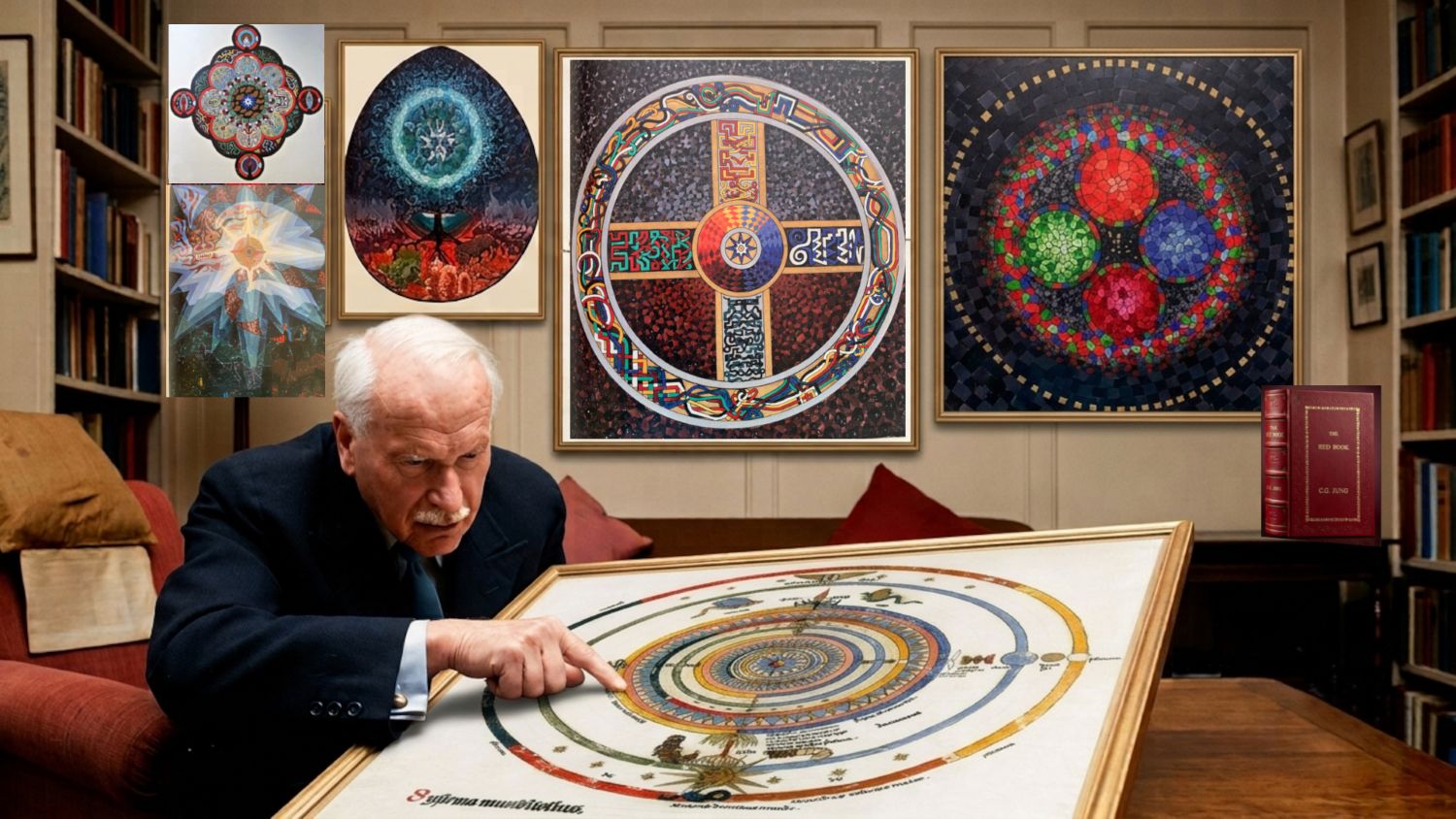
Carl Jung
“Be silent and listen: have you recognized your madness, and do you admit it? Have you noticed that all your foundations are completely mired in madness? Do you not want to recognize your madness and welcome it in a friendly manner? You wanted to accept everything. So, accept madness too. Let the light of your madness shine, and it will suddenly dawn on you. Madness is not to be despised and not to be feared, but instead you should give it life... If you want to find paths, you should also not spurn madness, since it makes up such a great part of your nature... Be glad that you can recognize it, for you will thus avoid becoming its victim. Madness is a special form of the spirit and clings to all teachings and philosophies, but even more to daily life, since life itself is full of craziness and at bottom utterly illogical. Man strives toward reason only so that he can make rules for himself. Life itself has no rules. That is its mystery and its unknown law. What you call knowledge is an attempt to impose something comprehensible on life.”
― C.G. Jung, The Red Book: A Reader's Edition
The Swiss Psychologist Psychiatrist Dr Carl Jung as I understand viewed spiritual awakening and psychological maturation (individuation) as a necessary though inherently painful and disorienting process. He famously noted, "there is no birth of consciousness without pain" — in his book The Development of Personality (Volume 17 of the Collected Works). He noted that the expansion of awareness forces the dissolution of the ego and brings uncomfortable, long hidden aspects of the unconscious into light. Furthermore, Jung’s specific sentiments regarding the severe difficulty of this process include:
The Inevitability of Suffering: Jung did not view a difficult awakening as a pathology or a sickness, but rather as an archetypal descent into the unknown. The struggle is not a sign that you are broken; it is the cost of forcing an expanded psyche into a previously outgrown container.
The Death of the Old 'Seeker': When the unconscious breaks through, the identities, timelines, and ego-based motivations that organized your old life dissolve. Jung identified this state as a 'deflation' or nigredo (the alchemical process of dissolution), where the false self or mask (persona) begins to fall away.
The Burden of Consciousness: As you awaken, you can no longer 'pretend' or play outdated social roles, which often leads to feelings of intense isolation, 'social fatigue', and an inability to relate to others as you used to. Jung framed this not as a punishment, but as a necessary preparation to relate to the world from a place of wholeness rather than performative masks.
The Danger of the Shadow: A particularly difficult phase occurs when repressed, 'darker' aspects of the psyche (the Shadow) emerge — such as buried anger, envy, or shame. Jung warned against the seductive danger of 'wallowing' in these emotions or in one's own remorse, noting that genuine integration requires conscious acknowledgment followed by constructive action, rather than dwelling in the victimhood of the experience.
https://youtu.be/NM0GkVi0TSg?si=T2D2k294RkgG2_Je
https://youtube.com/shorts/aJ1ZqZ6QkNg?si=zDvq1VaYfiUt9zWw
https://www.youtube.com/results?search_query=conversations+for+the+end
https://youtube.com/shorts/_UyjmQuXno4?si=oNCub5HEEKd_jD-7
https://youtube.com/shorts/30TJydntO9o?si=40R_zSsal-fUxW-f