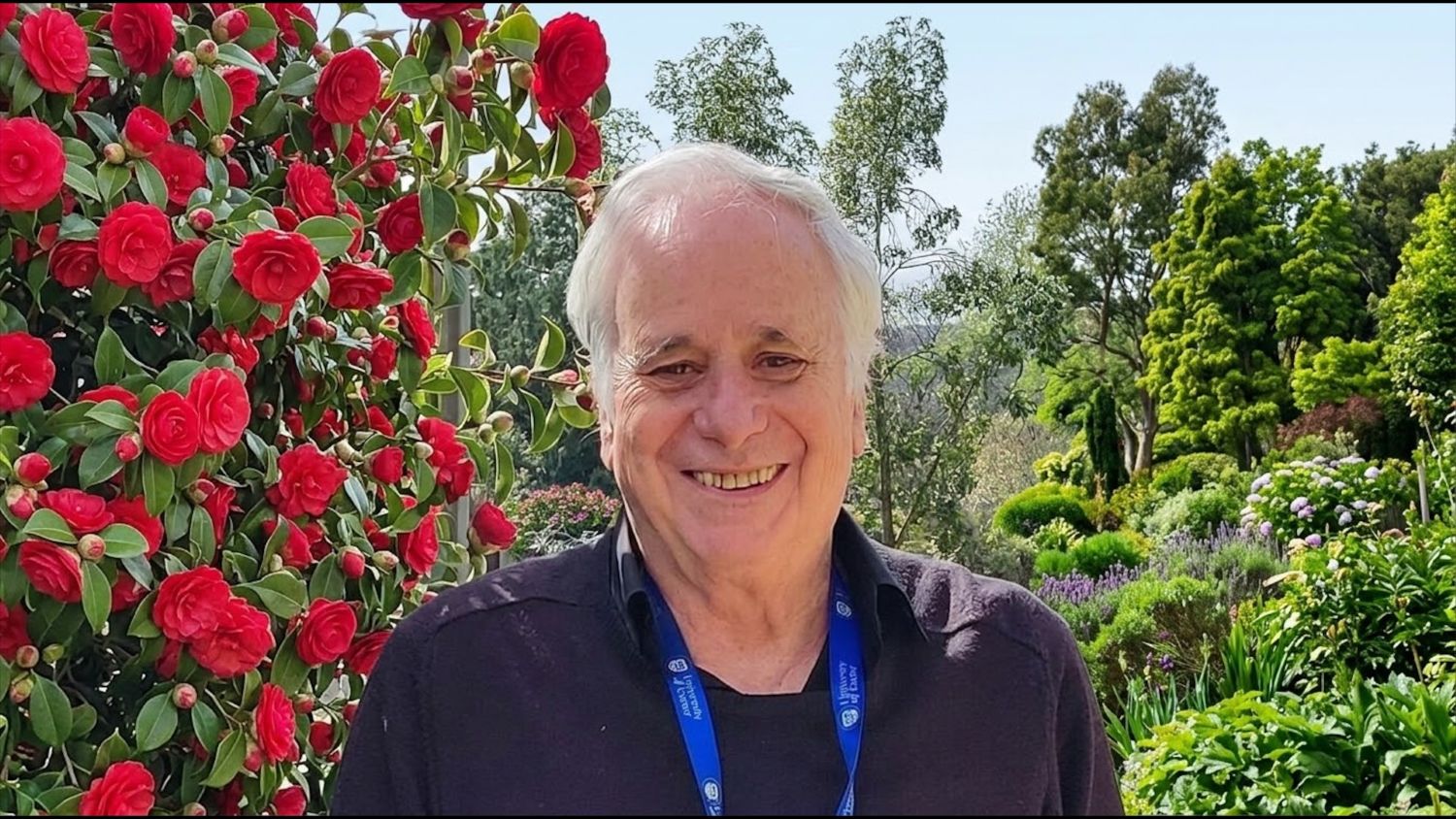
Ilan Pappé
To gaze upon the architectural majesty of true moral courage is to bear witness to figures who materialize through the dense fogs of historical obfuscation, standing unyielding against the monolithic consensus of their own kin. Among these rare sentinels of conscience are Professor Ilan Pappé and Norman Finkelstein, souls who anchor themselves completely to the uncompromising bedrock of verifiable reality. Their existence serves as a profound testament to the heavy, luminous burden of autonoetic consciousness - that agonizing yet ultimately liberating awakening wherein an individual refuses to allow state-sanctioned narratives to police their memories or sever their connection to humanity.
Pappé’s relentless refusal to avert his gaze from the harrowing tapestry of Palestinian displacement transcends the boundaries of ordinary political dissidence. It is the living embodiment of a sacred, internal reckoning, a desperate shield raised against the suffocating tides of collective amnesia designed to sanitize suffering. Alongside him stands Finkelstein, another beacon of intellectual integrity with whom Pappé shares a profound ideological kinship. While Pappé largely aligns with Finkelstein’s surgical historical analyses and his scathing indictments of Israeli state policy, a fascinating divergence emerges when the conversation shifts from diagnosis to remedy. They stand shoulder-to-shoulder in their fierce condemnation of Western political complicity and the academic gatekeepers who insulate state power from the reach of international law, yet they chart radically different trajectories regarding political activism and the ultimate architecture of resolution.
https://youtube.com/shorts/ZmKYA3q2P4g?si=fAKTMImS6mPvgdh3
https://youtu.be/DE8HkHBU8z8?si=ley32r4UkLr1cTTU
https://youtu.be/UrPTSduHI5I?si=MvXoZmWWXP5xg6y3
Despite these nuances in strategic philosophy, their mutual respect endures through the tempests of severe professional exile and relentless academic ostracization. Pappé has frequently anointed Finkelstein’s literary contributions with glowing praise, celebrating the industrious, tireless excavation required to dismantle entrenched ideological myths and lay bare the raw, unvarnished truths of human rights violations. Together, they remain formidable architects of dissent, reminding the world that history is not merely written by the victors, but preserved by those who dare to remember.
Concerning Dr Ilan Pappé:
https://youtu.be/1ZYiBwciN5k?si=PzeoTsPdHHTZAiR9
In the ever-shifting flux of conditioned phenomena, forms arise, clash, and dissolve like foam upon the ocean. Within this fleeting tapestry of existence, the mind of Ilan Pappé - born into the conditioned realm on the 7th of November 1954 in Haif - manifested as a scholar seeking to illuminate the deep roots of suffering (dukkha) tied to the Israeli Palestinian conflict. Operating within the streams of academia as an Israeli historian and political scientist, Pappé emerged among the New Historians, questioning established narratives and attachment to fixed historical illusions.
The New Historians emerged as a vanguard of revisionist scholarship in Israel, delving into newly declassified state archives to unearth the complex and often unspoken realities surrounding the nation's genesis. By interrogating foundational myths and juxtaposing them with documented archival evidence, these scholars transcended conventional political narratives, offering a profound and unvarnished reinterpretation of the events that shaped the modern Middle East.
Reflecting upon the impermanence of structures and the painful attachments of the past, Pappé's inquiry centred on the 1948 Palestinian expulsion and flight. He observed this turbulent grasping and aversion through the lens of a deliberate extinguishing of communities - an ethnic cleansing driven by the blueprint of Plan Dalet. Through his writings, such as The Ethnic Cleansing of Palestine (2006), A History of Modern Palestine (2003), and Ten Myths About Israel (2017), he attempted to awaken collective consciousness from the slumber of conditioned delusion, charting how attachment to land and tribal identity gives rise to endless cycles of sorrow.
Because the conditioned world often reacts defensively to the exposure of uncomfortable truths, Pappé's pointing toward suffering brought about its own friction. Having served as a senior lecturer at the University of Haifa and leading the Emil Touma Institute, he encountered the sharp winds of aversion: criticism within the Knesset and threats to his physical form. Recognizing the futility of remaining where the mind could no longer cultivate wholesome dialogue, he transitioned away from his birthplace in 2008, finding refuge at the University of Exeter to continue his academic stewardship.
In the realm of conventional politics, Professor Pappé sought mitigation of suffering through engagement, walking the path of the Hadash party and lending his voice to the democratic unity of a single shared space for all beings, regardless of labels. By supporting the Boycott, Divestment, and Sanctions movement, including academic boycotts, he expressed a non-violent yearning to dismantle institutional systems of oppression. From a perspective of ultimate liberation, all political constructs are transient illusions; yet within the relative realm of suffering and compassion, his life remains an ongoing testament to confronting the roots of structural harm and dreaming of a cessation of conflict for all people bound to the wheel of history.