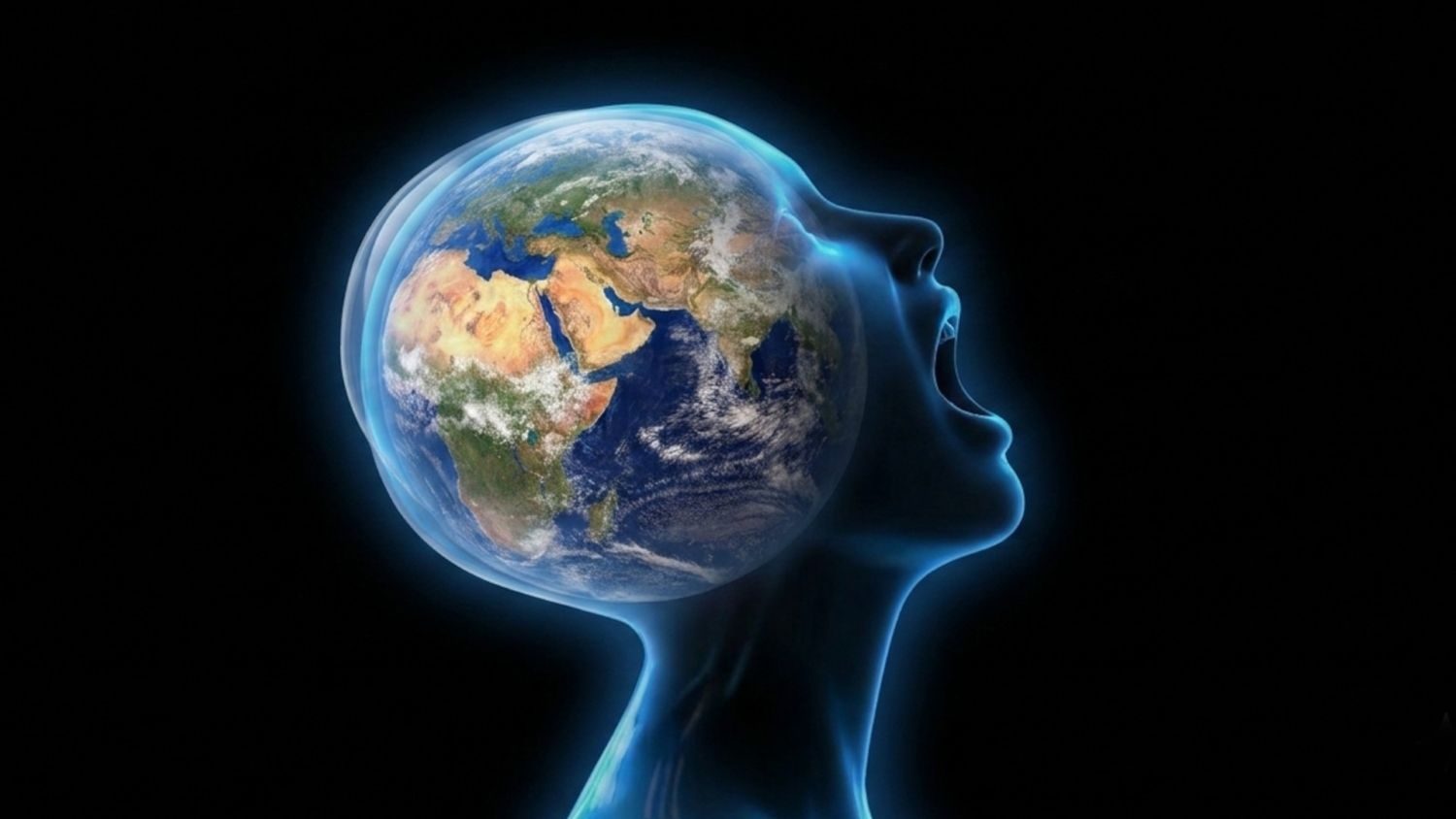
Drishti Srishti Vada
In the labyrinth of consciousness, where the mind wrestles with the illusion of individual separation, the philosophy of Drishti Srishti Vada emerges as a beacon of inquiry, illuminating the path toward a deeper understanding of reality. This philosophy invites us to challenge our ingrained beliefs, urging us to recognize that our perceptions are the brushstrokes that colour our existence. It beckons us to view the world not as a static entity but as a living canvas, shaped by our thoughts and beliefs, much like the eternal struggle of Sisyphus, who, in his relentless ascent, embodies the human quest for meaning and purpose.
As we embark on this journey, we may find ourselves misinterpreting the doctrine, potentially leading to a skewed understanding that veers toward solipsism or apathy. Yet, the true essence of this philosophy is a transformative tool — a means to dissolve the ego's false identifications and awaken to the profound interconnectedness that binds us all. The notion that 'creation' exists solely through observation resonates deeply, akin to an artist infusing life into a blank canvas, reminding us of our role as co-creators in the unfolding narrative of existence.
Reflecting on my own path, I recall the initial hurdles I faced in grasping Drishti Srishti Vada. In the theatre of my mind, I often felt like a mere actor in an absurd play, akin to Sisyphus, eternally pushing his boulder uphill, only to watch it tumble back down. Each moment felt like an audition for a role in a world that seemed detached, ensnared in a cycle of absurdity, yearning to break free from the shackles of my separate identity. Yet, within this relentless struggle lies the potential for awakening — a journey toward comprehending the deeper purpose of existence, reminiscent of the Christ, who bore the weight of the cross to transcend the illusion of separation. This realization compels me to embrace the interconnectedness of all beings, urging me to pierce through the veil of individuality and into the essence of unity. Through this metaphorical odyssey, I am not merely a player in a chaotic narrative but a seeker of truth, navigating the complexities of consciousness in pursuit of a higher calling.
As I continue this journey, I recognize that the challenges we face are not mere hindrances but sacred opportunities for growth. Each trial invites us to peel back the layers of illusion, unveiling the profound connections that unite us. This pilgrimage of the heart transforms our struggles into catalysts for awakening, propelling us toward a deeper understanding of our shared humanity.
In retrospect, I acknowledge my earlier dismissals of Advaita Vedanta, realizing now how naive I was to overlook its wisdom. The term Drishti Srishti Vada once seemed enigmatic, yet as I explored its depths, I began to appreciate the intricate beauty woven within its teachings. It serves as a poignant reminder that reality is not a static construct; it is a dynamic interplay shaped by our beliefs and perceptions.
At the core of this exploration lies the Power of Belief, acting as a prism through which we interpret our experiences. Our biases and past encounters tint our understanding, influencing the narratives we weave. As sages like Ramana Maharshi have illuminated, recognizing that our minds are the architects of our reality empowers us to transition from passive observers to active participants in the unfolding of existence. This awakening guides us to navigate life with heightened awareness and intention.
Thus, the journey through consciousness transcends mere intellectual exploration; it becomes a heartfelt quest for shared humanity. Embracing the philosophy of Drishti Srishti Vada compels us to question, to seek, and ultimately to awaken to the profound truth of our interconnectedness. Despite the inherent challenges of this journey, I firmly believe that cultivating compassion is paramount. Choosing to thrive without causing harm transforms from a mere option to a moral imperative, echoing the purpose of Christ's cross as a bridge from the illusion of separateness to the unity of existence.
In contemplating the teachings of Advaita Vedanta, I am deeply moved by the notion that our perception shapes our reality. The concept of Drishti Srishti Vada resonates profoundly; it suggests that the world we inhabit is intricately tied to our act of seeing, much like the vividness of a dream. This perspective challenges conventional views of an objective universe, inviting exploration of the boundaries of consciousness.
The thought of a fully mature Self realized being such as the Christ or Shri Ramana Maharshi perceiving reality as an expression of their non-dual awareness is both awe-inspiring and humbling. It prompts me to question how often I become ensnared in the illusion of separation from the world around me. Living in a "waking dream" encourages me to acknowledge the transient nature of my experiences and the projections of my mind.
Moreover, the ultimate truth of Ajata Vada, articulated by sages like Shri Ramana Maharshi, offers liberation. The realization that creation itself is an illusion, and that only the eternal essence of Brahman truly exists, fills me with peace. It invites me to relinquish the need for solid answers and embrace the mystery of existence. In this journey of understanding, I am reminded that the essence of life is not found in the external, but within the depths of my own being.
In the realm of Zen Buddhism, the concept of no objective reality reinforces this understanding. Zen masters consistently remind us that the world we experience is not an independent universe; it is a projection of our consciousness, tinted by our thoughts, karma, and judgments. Grasping Drishti Srishti Vada means acknowledging that the world rises and falls with our consciousness, much like a dream. However, true liberation requires the psychological surrender of the 'observer' into that absolute, undivided awareness.
Shri Ramana Maharshi taught that while Ajata represents the ultimate reality of a Self-realized sage, it can be too radical for beginners grappling with ego and separation. To effectively guide seekers, he accommodated other theories, using them as foundations for practicing Self-inquiry (Atma-Vichara) and tracing the ego back to its source. This holistic approach emphasizes the importance of empathy and understanding in our communication, as we navigate the complexities of existence together.
Note:
Shri Michael James (UK) provides a profound and insightful synopsis of the philosophical concept of Drishti Srishti Vada, which explores the intricate relationship between perception and creation. This perspective emphasizes how our understanding and interpretation of reality shape our experiences and interactions with the world around us. In his analysis, James articulates the nuances of this doctrine, shedding light on its implications for both, individual consciousness and collective existence. His work invites readers to reflect deeply on the nature of reality and the role of perception in shaping our lives. For a comprehensive exploration of these ideas, you can visit the full text here.
Dr. Robert Lanza’s theory of Biocentrism proposes that consciousness creates the universe, rather than being its accidental byproduct. He argues that space, time, and physical objects are not independent external realities, but rather mental constructs and 'tools of animal understanding' that shape information into coherent experiences.